

Van Heater Maintenance: Keep Your Diesel or Gas Heater Starting When It's Cold
Combustion heaters die from neglect, not use. Five checks and one big service keep yours lighting at 2 a.m.
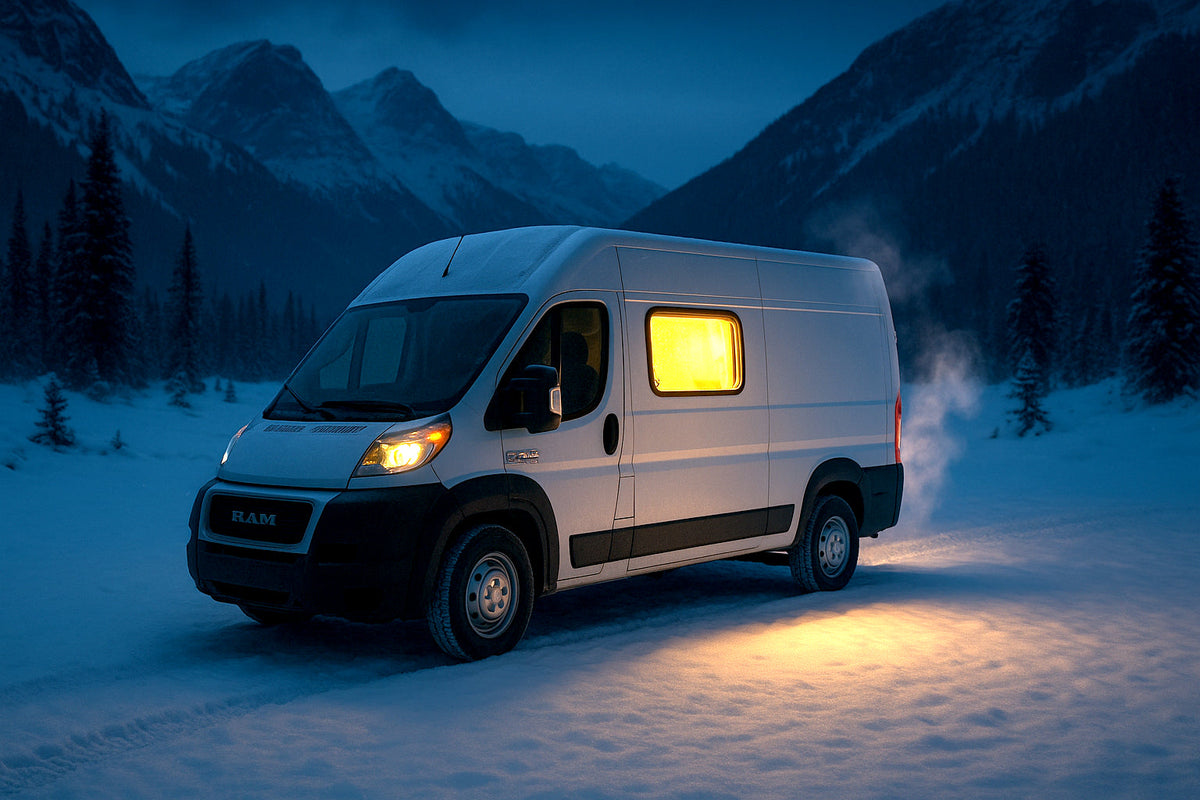
Heaters don't quit in the driveway.
They quit at 2 a.m., at 9,000 feet, on the coldest night of the trip.
You hit the switch. The fan spins. It clicks, tries, and shuts down.
It almost never comes out of nowhere. It's usually months of sitting, a dirty intake or a tired battery catching up all at once.
Quick answer
Diesel and gas air heaters fail from neglect far more than from use. Run the heater once a month for 30 to 60 minutes at full power, keep the air intake and exhaust clear, check the fuel line and pump, keep the wiring tight and the batteries charged, and do a full service around 2,000 hours. The same rules apply to an Espar, a VELIT or an off-brand heater.
1. Run it regularly, and run it hot
Combustion heaters hate short cycles and long naps. Fire yours up once a month, including the off-season, and run it 30 to 60 minutes at full power. Running hot burns off carbon, keeps the glow plug clean and moves fresh fuel through the whole system. A heater that sits all summer, or only ever runs on low for a few minutes, is the one that clogs, won't start, or pools raw fuel in the combustion chamber.
2. Check the air intake and exhaust
A heater has to breathe. Look at the combustion air intake and the exhaust for mud, dust, snow, bugs, soot and road debris, and clean or replace any screens or filters. A blocked intake or exhaust means a dirty burn, and a dirty burn means carbon buildup, which is how most heaters slowly die. If the exhaust gets plugged, the heater will shut itself down, or try to and soot itself up in the process. In winter, check that snow hasn't drifted over the exhaust before you start it.
3. Watch the fuel line and pump
This is where most heater failures start, and most of it you can check by looking. Sniff for fuel near the heater and under the van, look for drips or wet spots, and make sure the fuel line isn't kinked, cracked or rubbing on the frame. The fuel pump usually lives under the van near the tank. Checking its mounting, its connector or the small inline fuel filter means getting under the van, so leave that to a heater technician unless you're comfortable with fuel lines. If the heater starts and stops, smokes, or clicks without lighting, a fuel delivery problem is a likely cause.
4. Electrical: heat takes power
Starting a combustion heater draws far more power than running it, because the glow plug has to get hot enough to light the fuel. Weak power is one of the most common reasons a heater clicks and quits. Tighten every terminal and ground, look for corrosion, check the inline fuse, and keep the house batteries charged. If you run lithium, a battery that's locked out of charging in the cold can take the heater down with it. Our guide to lithium batteries in the cold explains why.

5. The 2,000-hour service
If your heater is a few years old or sees heavy winter use, rebuild it before it leaves you cold. Around 2,000 hours, replace the glow plug, glow plug screen, fuel filter and gaskets, and deep-clean the combustion chamber, heat exchanger and housing. Your heater's manual has the exact parts and interval. Done on schedule, these heaters run for thousands of hours without drama.
Run a carbon monoxide alarm
A combustion heater vents its exhaust outside, but a cracked exhaust tube, a bad gasket or a blocked outlet can change that. A working CO alarm in the living space is cheap and non-negotiable for anyone sleeping in a van with a fuel heater. Test it when you do your monthly heater run.
Diesel and gas heaters we trust
Plenty of heaters exist. Two brands keep proving themselves in real use:
VELIT 4kW Diesel or Gas Air Heater (14,000 BTU): enough output to heat real interior volume in larger vans, Class B+ and smaller Class C builds, not just the bench seat.

Espar Airtronic S3: a smaller 2kW heater with rock-solid engineering and quiet operation, and one of the most reliable combustion heaters made.
The Savage take
Put the monthly run on your calendar, and treat it as the maintenance. Thirty minutes at full power once a month prevents most of the failures we hear about, and it's when you'll spot a dirty intake, a weak battery or an air bubble in the fuel line before a cold night finds it for you. If your heater has a lot of hours and you don't know when it was last serviced, do the 2,000-hour service before winter rather than after it quits.
The bottom line
Heaters die from neglect, not use. Run it monthly, keep the intake and exhaust clean, watch the fuel line, keep the batteries charged, and do the 2,000-hour service on time. That's what keeps a diesel or gas heater lighting when you need it most.
Shopping for a heater? See the VELIT 4kW air heater.
Common questions
Why won't my diesel heater start?
The usual causes are low battery voltage, air in the fuel line, a carbon-fouled glow plug or a blocked intake or exhaust. Check power first, then fuel, then airflow.
How often should I run my van heater in summer?
Once a month for 30 to 60 minutes at full power. It keeps fuel moving and carbon from building up while the heater isn't needed.
How often does a diesel heater need servicing?
Do the basic checks monthly and a full service (glow plug, screen, filter, gaskets, deep clean) around 2,000 hours, or sooner if it starts struggling. Follow your heater's manual.
Does Savage install heaters?
No. We sell the VELIT 4kW heater and ship it to you for your own installer.
What else should I do to get my van ready for winter?
Drain or heat the water system, keep the batteries charged and watch tire pressure. Our winterizing guide covers it step by step.


